Hallway Drawing
Project Overview
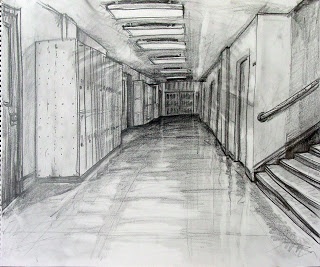
In this observational drawing assignment, students will explore linear perspective and full-range value by drawing a school hallway from direct observation and photographic reference. Students will first identify the vanishing point within the hallway and capture a photograph of the space. The image will then be converted to black and white to emphasize value over color.
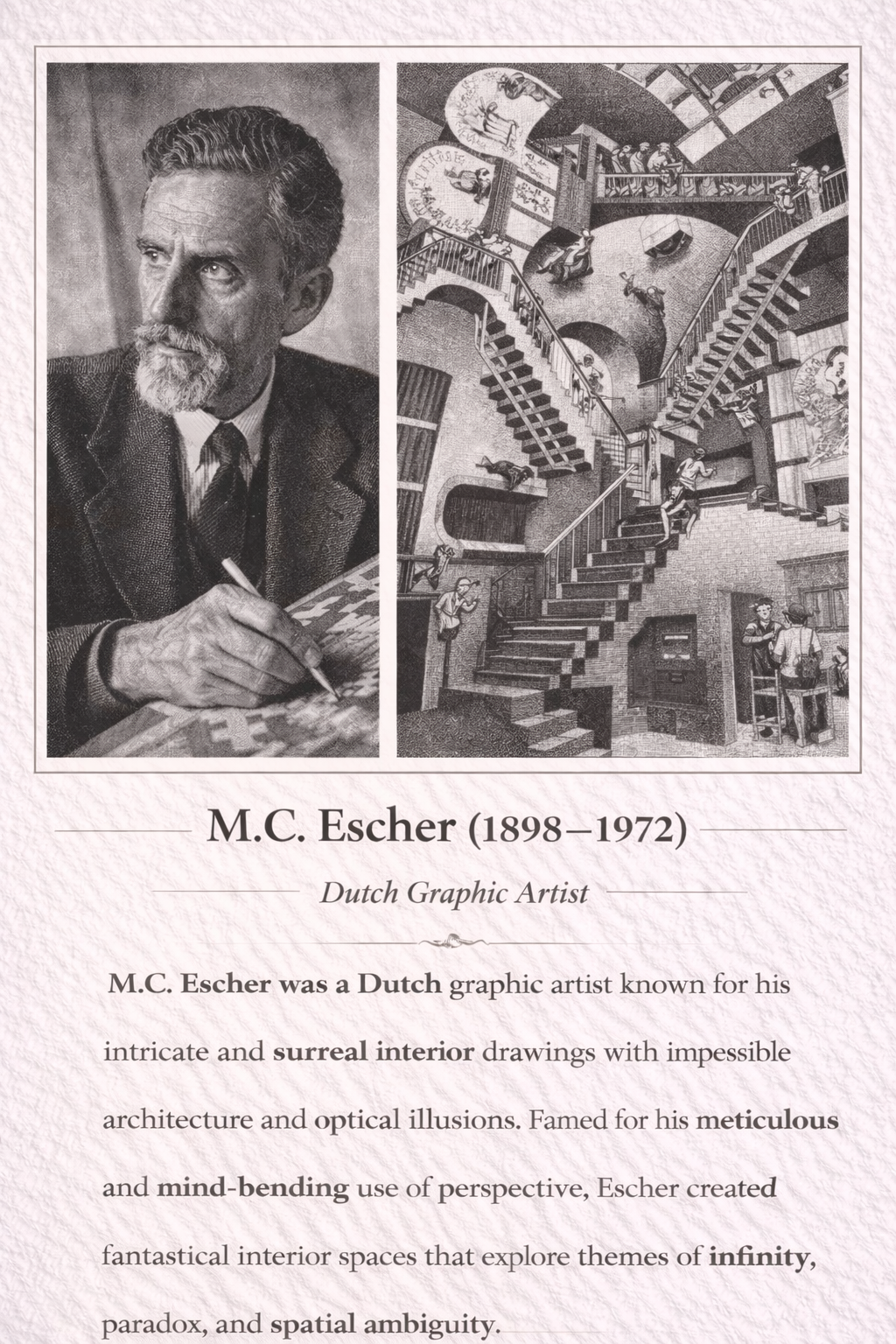
Inspired by artists such as M.C. Escher, known for his complex use of perspective, and Leonardo da Vinci, who mastered light and shadow to create depth, students will focus on creating the illusion of three-dimensional space on a two-dimensional surface.
This project emphasizes one-point perspective, accurate proportions, and achieving a full range of value—from deep blacks to bright highlights—to create realistic depth and atmosphere.
Objective
Students will:
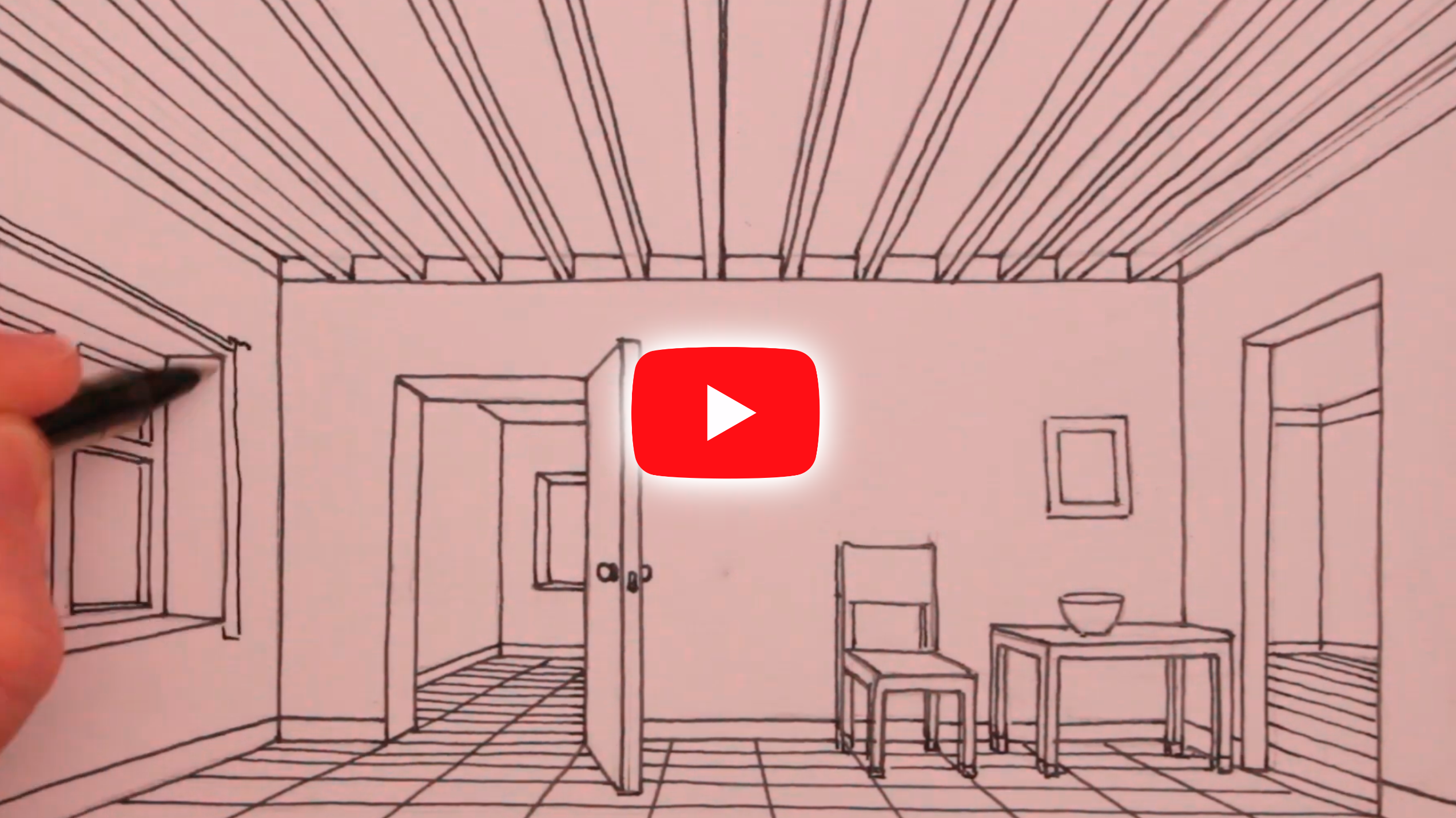
* Identify and apply one-point perspective using a clear vanishing point.
* Accurately observe and draw architectural details within the hallway.
* Use a black-and-white reference photo to analyze light and shadow.
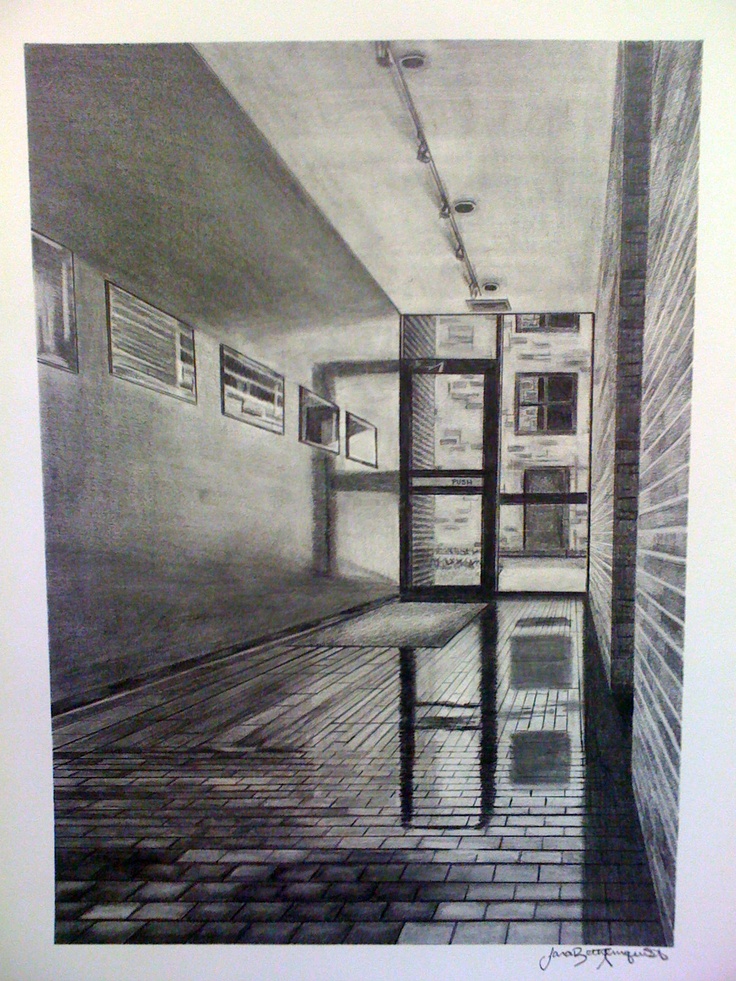
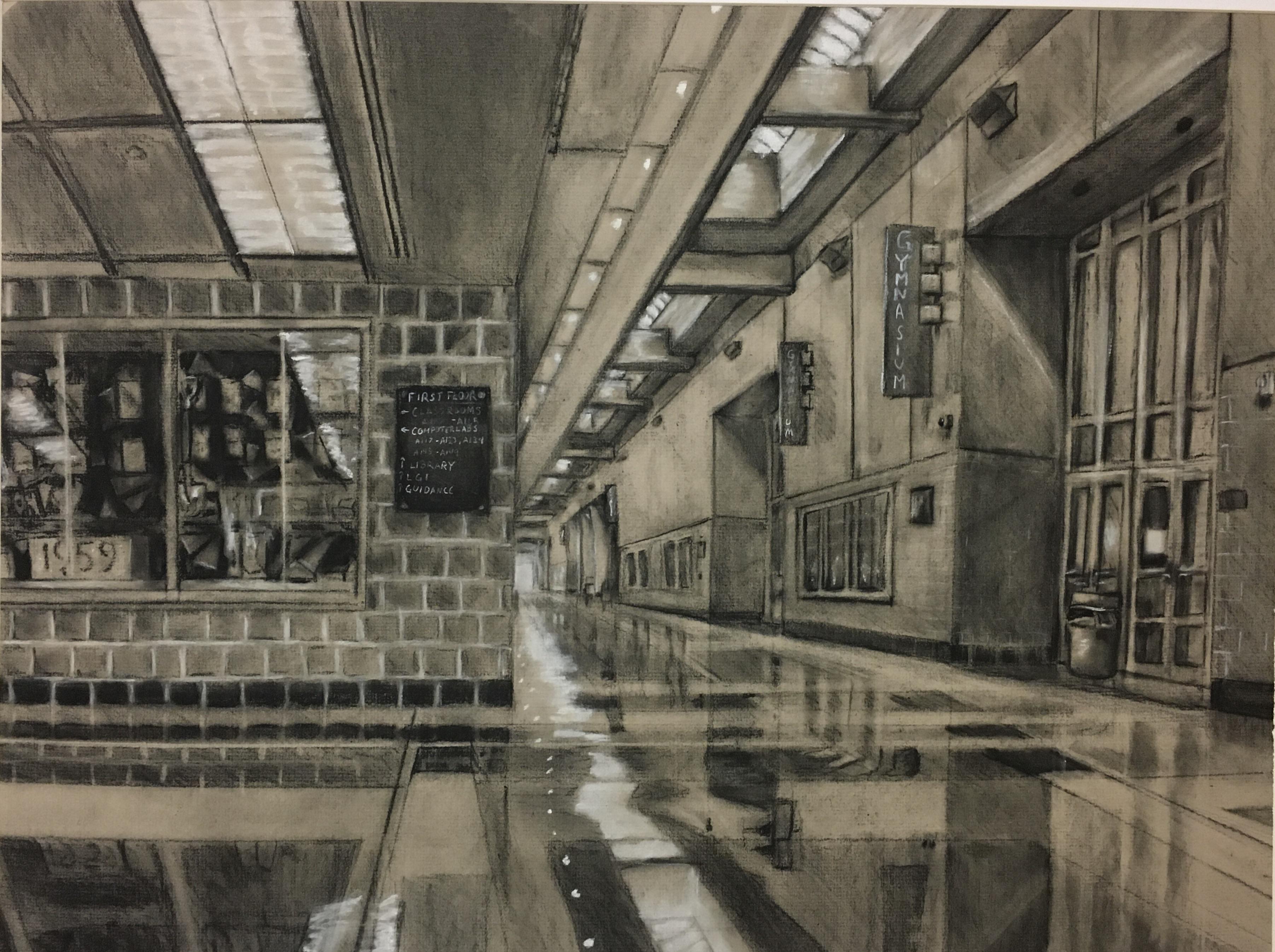
* Demonstrate a full range of value (highlight, midtone, core shadow, reflected light, cast shadow).
* Create depth and realism through careful shading and blending techniques.
Materials
* Drawing paper (minimum 12” x 18”)
* Pencils (variety: HB–6B recommended)
* Erasers (kneaded and vinyl)
* Blending tools (stumps or tissue)
* Ruler
* Smartphone or camera for photographing hallway
* Black-and-white printed reference photo
Process
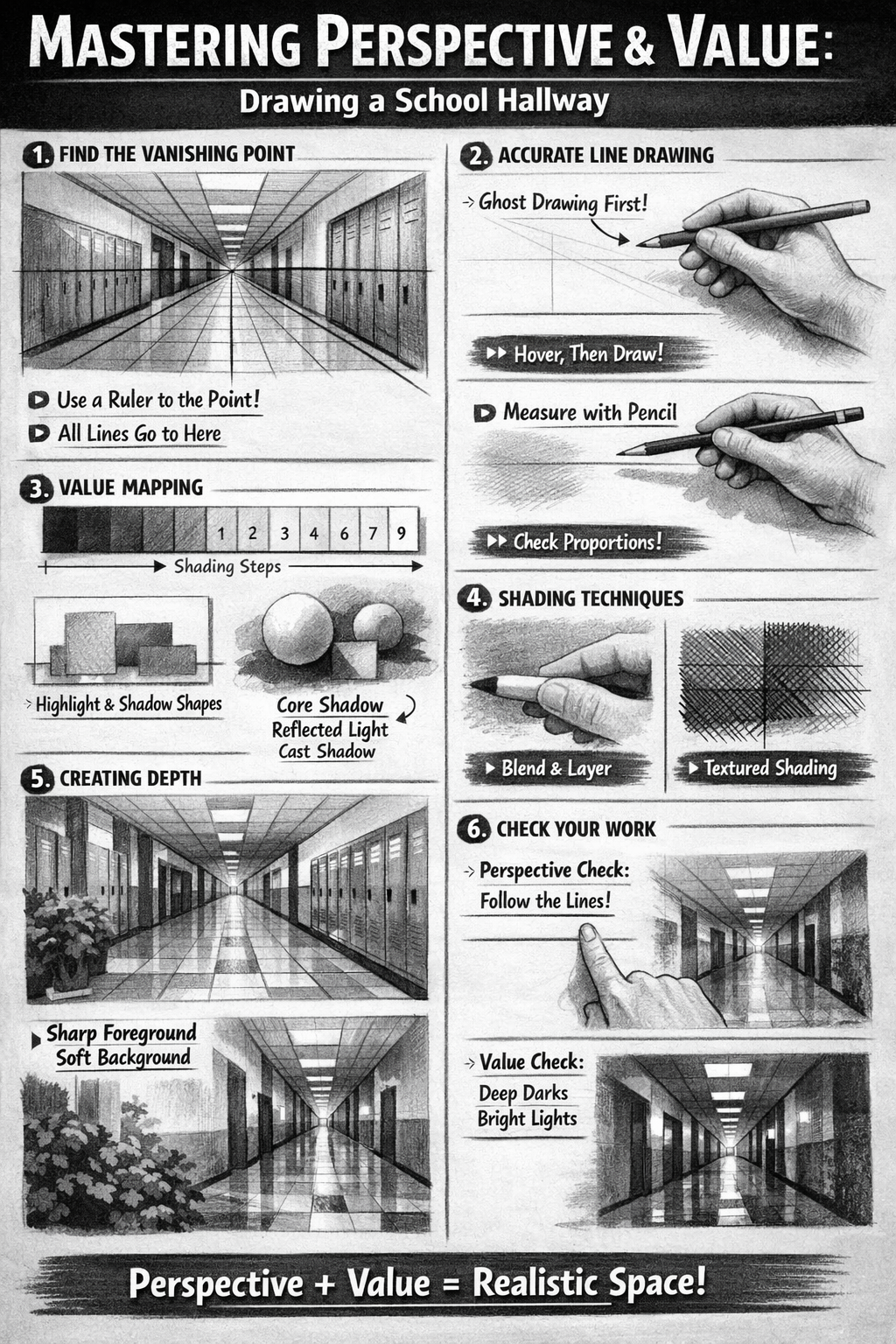
1. Photography & Perspective Identification:
Stand in a school hallway and identify the vanishing point (where parallel lines converge). Take a photograph that clearly shows this perspective.
2. Black-and-White Conversion:
Convert the image to black and white to better observe contrast and value relationships. Print the photo for reference.
3. Line Drawing:
Lightly sketch the hallway using a ruler to establish the horizon line and vanishing point. Carefully draw walls, lockers, doors, ceiling lines, and floor tiles using one-point perspective.
4. Value Mapping:
Identify the lightest lights and darkest darks in the photograph. Lightly block in major shadow shapes before blending.
5. Shading & Full Value Range:
Gradually build layers of graphite to achieve smooth transitions. Push contrast to include a full range of values, creating strong depth and realism.
6. Refinement:
Enhance details and edges. Adjust contrast as needed to ensure strong spatial depth and visual clarity.
Assessment Criteria
* Accurate use of one-point perspective and vanishing point
* Strong observational drawing skills
* Full range of value from highlight to deep shadow
* Smooth blending and controlled shading technique
* Overall craftsmanship and effort
Essential Question
How does perspective and value work together to create the illusion of realistic space on a flat surface?
Learning Objectives / Student Targets
By the end of this project, students will be able to:
1. Observation & Representation
* Accurately observe and document real objects through drawing.
* Demonstrate proportional relationships and spatial awareness in a still life composition.
2. Material & Technical Skill
* Apply value and shading with graphite to create depth and form.
* Use ink to reinforce contour, emphasize contrast, and define edges.
* Incorporate oil pastel to build bold color, expressive texture, and layered richness.
* Use colored pencil to refine details, enhance form, and smooth transitions in color and tone.
3. Integration of Media
* Thoughtfully combine pencil, ink, oil pastel, and colored pencil into a unified visual whole.
* Make intentional decisions about where each medium contributes best to overall structure, mood, and emphasis.
4. Composition & Design
* Organize visual elements to demonstrate balance, proportion, and dynamic rhythm.
* Guide the viewer’s eye through strategic use of contrast, mark-making, and color placement.
5. Creative & Critical Thinking
* Experiment with media behaviors and problem-solve accordingly.
* Communicate personal artistic decisions through expressive mark-making and color choices.
6. Reflection & Artistic Growth
* Articulate strengths, challenges, and artistic intent in reflection or critique.
* Demonstrate increased confidence and competence with multi‑media processes.
Ohio Fine Arts Standards (Visual Arts)
Creating (CR)
Utilize sources to conceptualize personally relevant ideas.
Students use observational studies, thumbnails, and exploratory investigations to develop conceptually driven work.
Develop aesthetic and stylistic solutions through preparatory work.
Students refine compositions through multiple studies and intentional planning before final execution.
Performing (PE)
Demonstrate skilled artisanship through persistence.
Students demonstrate advanced craftsmanship through careful selection, handling, and care of materials and tools.
Broaden materials and techniques with advanced skill.
Students apply tools, media, and techniques with increasing precision and technical fluency to enhance artistic intent.
Use elements of art and principles of design to inform personal style.
Students intentionally manipulate value, texture, layering, composition, and design systems to communicate complex ideas.
Responding (RE)
Apply vocabulary to interpret and evaluate works of art.
Students use advanced art vocabulary to support interpretations and critical judgments.
Use art criticism independently when responding to works of art.
Students analyze how artistic methods (value structure, surface treatment, layering, compositional strategies) communicate meaning and mood.
Refine self-assessment and goal-setting strategies.
Students evaluate and refine work through sustained reflection, critique participation, and revision cycles.
Analyze how individual artists are influenced by cultural factors.
Students interpret artwork by considering relevant contextual, cultural, and disciplinary influences.
Connecting (CO)
Assess the impact of advocacy in the visual arts.
Students create works reflecting personal experience while considering broader artistic dialogue.
Analyze the personal impact of art experiences.
Students synthesize personal knowledge, interdisciplinary connections, and observation into conceptually cohesive artwork.
Develop a personal philosophy of art based on aesthetic theory and visual culture.
Students relate artistic decisions to other disciplines (e.g., science of materials, psychology of perception, design theory).
Grading Rubric
Rubrics have become popular with teachers as a means of communicating expectations for an assignment, providing focused feedback on works in progress, and grading final products. A rubric is a document that articulates the expectations for an assignment by listing the criteria, or what counts, and describing levels of quality from excellent to poor.


Student Reflection
A student reflection is a brief, thoughtful explanation of how and why a student created their artwork, including the choices they made, challenges they faced, and what they learned during the process. In art, reflection is important because it helps students develop critical thinking, recognize growth, strengthen their creative decision-making, and take ownership of their artistic development.

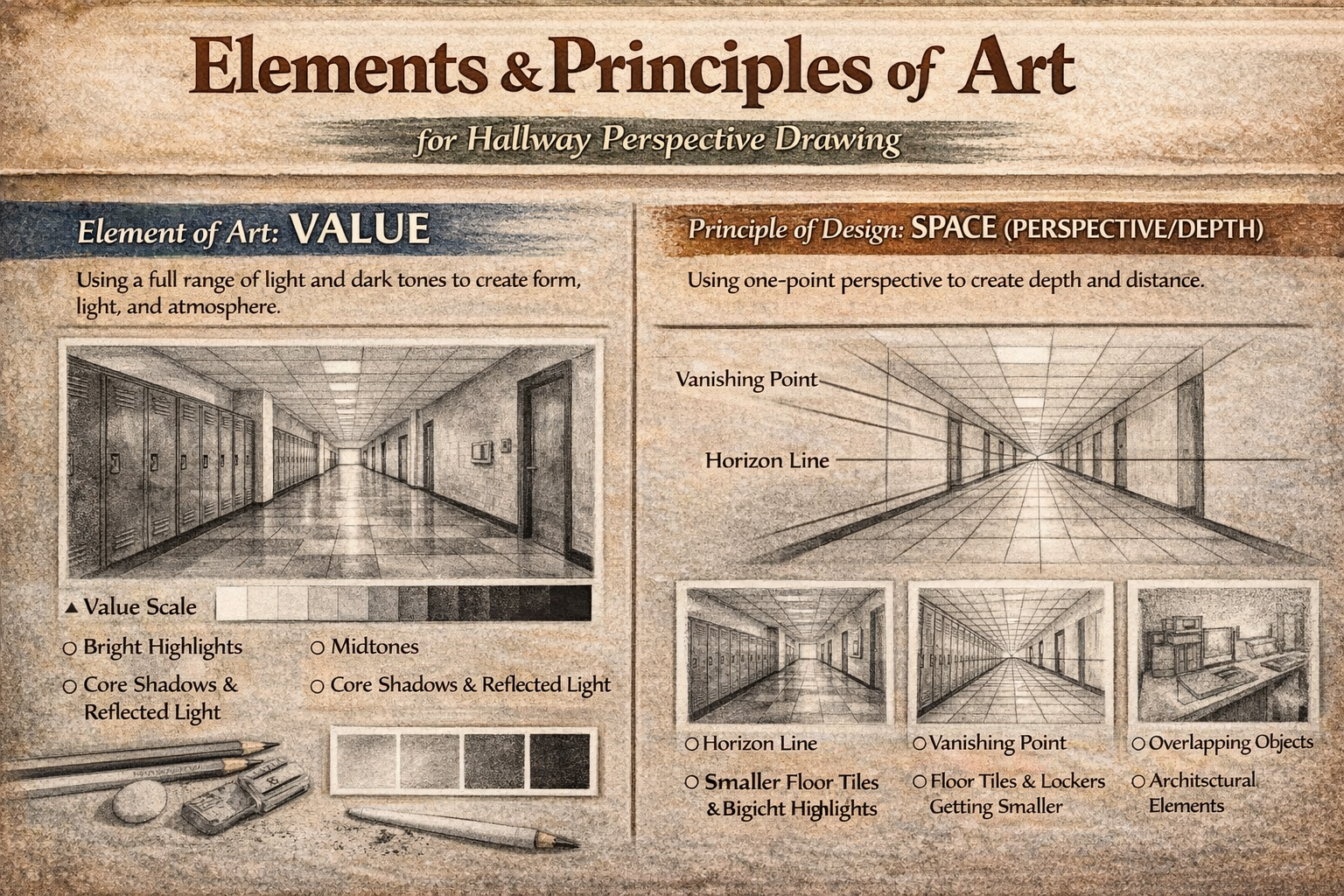
Element of Art & Principle of Design
Pencil Drawing Artist
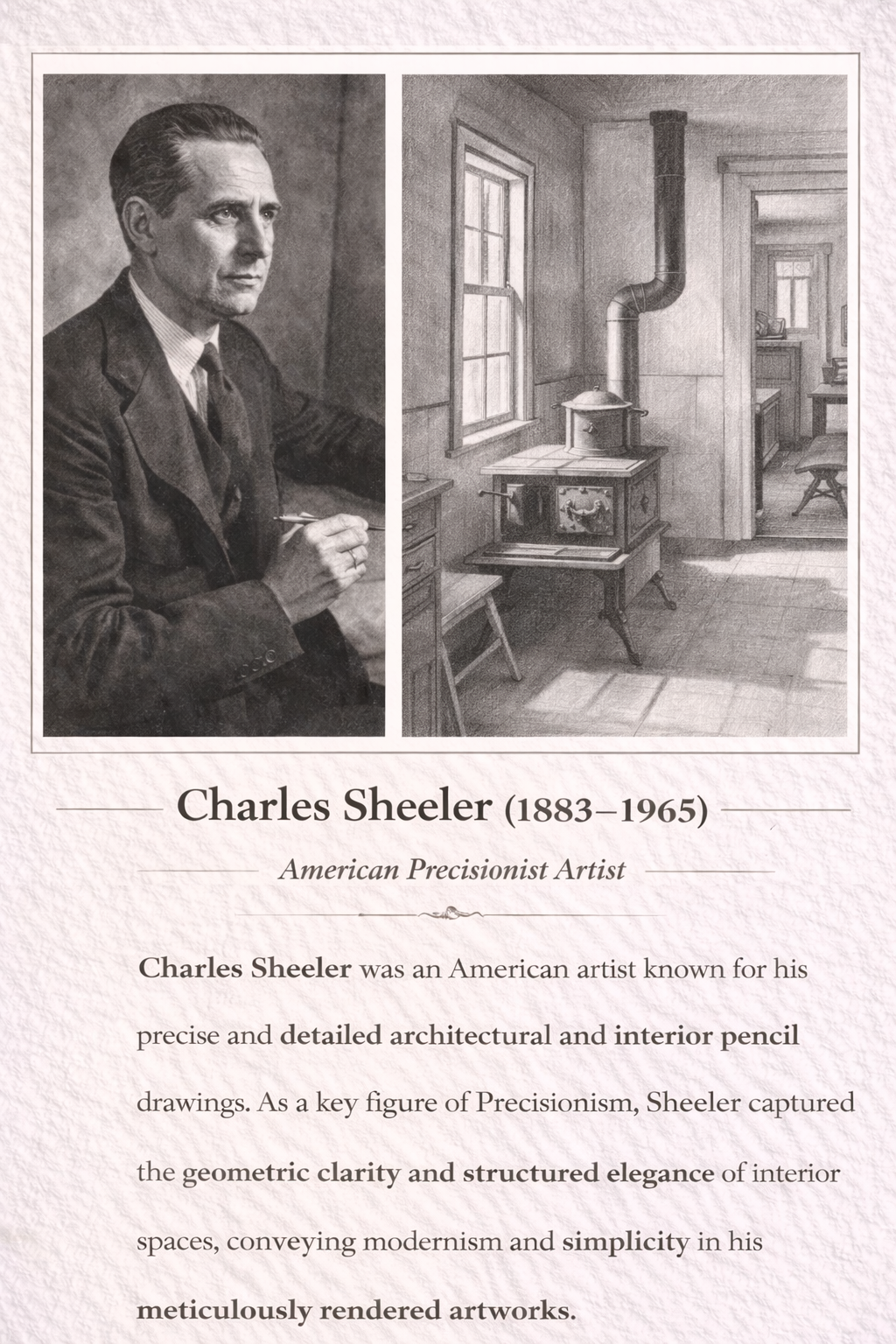

Techniques
Project Demonstrations

Examples




“Creativity takes courage.”

Cloverleaf High School
Follow Us